
Salesforce executives, including South Asia CEO Arundhati Bhattacharya, predict a significant shift in India towards wider enterprise AI adoption, moving from experimentation to production deployments. The company plans to invest in physical infrastructure and talent upskilling in India. Salesforce's vision for the "agentic enterprise" involves a four-layer architecture, emphasising the need for robust security and governance for autonomous agents. Executives also highlighted the evolving nature of jobs, with AI handling repetitive tasks and creating new specialised roles, positioning India as a potential leader in agentic innovation by 2030.

Senior Congress leader Shashi Tharoor has articulated India's position on BRICS, advocating for it to be a "non-West, but not anti-West" platform, a stance he believes is crucial for India's national interest. He highlighted the prestige of hosting the BRICS summit, India's responsibility to represent the Global South, and the significance of bilateral meetings, particularly with China and Russia. Tharoor also addressed the strained India-China relations, citing border issues and trade leverage, and discussed the challenges within BRICS, including difficulties in achieving consensus on global issues and trade imbalances, while also considering the need for diversified international relations amidst unpredictable US sanctions.

India is hosting the BRICS summit, leveraging the platform to address global trade tensions and champion the developmental priorities of the Global South, including food, energy, and supply chain security. The summit, attended by leaders like President Xi Jinping and Vladimir Putin, will focus on resilience, innovation, cooperation, and sustainability, with India aiming to strengthen intra-BRICS collaboration and discuss global matters. The expanded BRICS grouping represents a significant portion of the world's population and GDP, making its discussions crucial for global economic stability.

'In the past, when the Indian markets have been flat for two years, the next year's returns have ranged between 5 per cent and 55 per cent.'

India strongly criticised Pakistan at the United Nations, accusing it of hypocrisy regarding religious freedom and funeral rights. India's First Secretary Bhavika Mangalanandan highlighted Pakistan's refusal to accept the bodies of its own soldiers killed in the 1999 Kargil war, contrasting it with Pakistan's current criticism of India. She also pointed to Pakistan's poor record on minority rights and criticised a UN report for selectively targeting India.

Indian benchmark indices Sensex and Nifty extended their rally in early trade, driven by strong buying in IT firms and an earnings-driven surge in Tata Group's retail arm, Trent, which reported a 25 per cent increase in net profit.
A Microsoft Work Trend Index report reveals India has the highest share of "Frontier Professionals" globally, with 32% of its AI users employing AI agents in multi-step workflows, double the global average. Indian professionals are not just adopting AI but are actively redesigning work processes, demonstrating strong leadership alignment and a focus on human oversight and critical thinking. Major Indian IT firms like Infosys, TCS, and Wipro show rapid adoption and significant productivity gains with Microsoft 365 Copilot.

This article details the quarter-century journey of BRICS, from its inception as an economic acronym by a Goldman Sachs economist to its current status as an expanded eleven-member international bloc. It highlights its growth, key historical moments, and the significance of its upcoming summit, particularly with Iran's renewed importance in discussions.

Indian benchmark indices, Sensex and Nifty, experienced a significant downturn, with Sensex tanking 778 points and Nifty closing at a five-month low, driven by surging crude oil prices, geopolitical tensions, and fears of further interest rate hikes by major central banks.

Indian benchmark indices, Sensex and Nifty, closed largely unchanged after a volatile trading session, influenced by persistently high crude oil prices, selling pressure in major bank stocks, and investor caution ahead of the US Federal Reserve's policy decision.

Indian stock markets witnessed a significant rally, with the Sensex soaring 905 points and the Nifty topping 22,900, primarily driven by strong buying in banking and FMCG shares, coupled with easing crude oil prices and a US Fed rate pause.

Indian benchmark indices Sensex and Nifty experienced a significant drop in early trade, primarily due to a sell-off in IT stocks, a surge in crude oil prices, and investor caution ahead of the US Federal Reserve's policy decision.

Indian benchmark equity indices, Sensex and Nifty, experienced a decline in early trade due to elevated crude oil prices, ongoing geopolitical uncertainties, and investor caution ahead of the US Federal Reserve's policy decision later this week. Track Sensex, Nifty on October 26.

The benchmark BSE Sensex rebounded by 362 points, ending a four-day losing streak, driven by strong buying in metal, private banking, and oil and gas shares, while the broader NSE Nifty saw modest gains despite paring some advances in the closing session.

Indian benchmark equity indices, Sensex and Nifty, closed lower for the fourth consecutive session, driven by a surge in crude oil prices above USD 114 per barrel due to escalating tensions in West Asia, coupled with broad-based selling and FII outflows.
Mumbai's Anish Bhujle and Muradabad's Vikas Mahajan clinched the Category A and B titles respectively at the 16th BMW Golf Cup 2026 national final in Gurugram. They will now represent India at the BMW Golf Cup World Final in South Africa in March next year, competing against leading amateur golfers from participating nations. The national final featured 40 top amateur golfers selected from 2,300 participants this season.

Over 200 Indian peacekeepers, including women and staff officers, serving with the UN Mission in South Sudan (UNMISS) have been awarded the prestigious UN medal for their exceptional service. India is a significant contributor to UN Peacekeeping, deploying over 4,200 personnel globally.

There is an unprecedented global demand for the ICC Cricket World Cup 2027 tickets, with over 1.5 crore applications already received from 142 countries for the tournament set to be hosted in Africa.
Indian equity benchmarks Sensex and Nifty experienced a decline in early trade, primarily due to a sell-off in power and metal stocks, mirroring a broader downturn across Asian markets. Elevated crude oil prices and firm US bond yields further dampened investor sentiment, while an expert warned of an impending correction in overvalued mid and small-cap segments. Track Sensex, Nifty on October 22.

For India, the goal is not simply to host another grand diplomatic gathering. It is to prove that a diverse coalition of emerging powers can still deliver.

Indian benchmark indices, Sensex and Nifty, experienced declines in early trade due to persistently high crude oil prices and significant selling pressure in IT stocks, with global factors like US bond yields and upcoming Federal Reserve decisions also contributing to cautious investor sentiment. Track Sensex, Nifty on October 27.
Indian equity benchmarks Sensex and Nifty extended their losses for a third consecutive session, with the Sensex declining 460.30 points and the Nifty dropping 123.70 points, primarily due to surging crude oil prices driven by escalating tensions in West Asia and weak global cues.
Indian benchmark indices Sensex and Nifty opened higher, extending their previous session's rally, driven by a decline in global oil prices, despite continued selling by Foreign Institutional Investors.

Indian equities, particularly the Nifty 50, have significantly underperformed their Asian and global counterparts over the past year, with the index down 10.6 per cent. This lag is attributed to factors like rising global oil prices, rupee depreciation, and a lack of participation in the global chipmaker rally that boosted markets like South Korea and Taiwan.

Indian benchmark stock indices, Sensex and Nifty, rebounded significantly after a four-day losing streak, driven by value buying and strong performance in metal, telecommunication, and healthcare sectors.
Minister of State for Telecom Chandra Sekhar Pemmasani urged BRICS nations to collaborate on building institutional capacity and advocating for fair standards in international telecom and ICT bodies. He highlighted India's willingness to share its modular, open-source digital public infrastructure frameworks like Aadhaar and DigiLocker, emphasising their role in sustainable development and economic growth across the Global South.
Indian benchmark indices Sensex and Nifty closed lower, primarily due to declines in Reliance Industries and IT sector stocks, coupled with rising crude oil prices and investor caution ahead of the US Federal Reserve's policy decision.
Indian equity benchmark indices Sensex and Nifty rallied for the second consecutive session, driven by strong buying in IT firms and a significant boost from Tata Group's retail arm Trent following its impressive September quarter earnings.

India's bid to host the 2038 Asian Games will not be decided before 2028, as the Olympic Council of Asia (OCA) has revealed that five other countries are also vying for the same edition.
Indian benchmark indices Sensex and Nifty saw a sharp rebound in early trade, driven primarily by a rally in IT stocks and a decline in crude oil prices, even as global markets faced selling pressure due to US inflation concerns. Track Sensex and Nifty on
Indian benchmark equity indices, Sensex and Nifty, ended sharply lower, with the Sensex tumbling 876.37 points and the Nifty dropping below 22,900, primarily due to a decline in private bank stocks like HDFC Bank and Axis Bank, alongside weak global market trends.

A new IDC report reveals that artificial intelligence is prompting organisations worldwide to retrieve and utilise previously archived, "cold-tier" data for AI training, significantly increasing its perceived value and leading to longer data retention periods and a burgeoning market for datasets.

Indian benchmark indices, Sensex and Nifty, closed marginally lower due to elevated crude oil prices, fresh US-Iran tensions, and expectations of a tighter monetary policy from the US Federal Reserve, despite strong domestic GDP growth.

The southwest monsoon has withdrawn from India, while the northeast monsoon has commenced in southern regions, bringing a wet spell. This year's southwest monsoon saw a rainfall deficit, largely attributed to the strengthening El Nino conditions, which are expected to persist until February 2027 and could become the strongest since 1950.
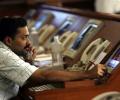
Indian benchmark indices, Sensex and Nifty, recovered early losses on Wednesday, driven by strong buying in IT stocks and HDFC Bank, sustaining the previous session's recovery despite FII outflows. Track Sensex, Nifty on October 14.

The International Cricket Council (ICC) has confirmed that the qualifiers for the Los Angeles Olympics' cricket competition will take place in January-February 2028, according to a media report.
Indian benchmark equity indices, Sensex and Nifty, significantly recovered from sharp early losses, driven by buying in State Bank of India and Reliance Industries, alongside fresh foreign fund inflows, despite declines in Axis Bank and HDFC Bank.

The BRICS summit in New Delhi brings together leaders from major emerging economies to address global challenges like trade disputes, geopolitical upheavals, and the economic impact of conflicts in Ukraine and West Asia. India, as chair, aims to position BRICS as an economic growth engine, focusing on the Global South's food, energy, and supply chain security. The summit also highlights the grouping's expansion and its growing influence in global governance.

Indian benchmark equity indices, Sensex and Nifty, rebounded in early trade after a three-day slide, driven by strong buying in blue-chip bank stocks and a firm trend in global markets, supported by easing US bond yields and record foreign-currency deposit inflows.

'My biggest fear about AI is that humans are going to rush to deploy it before AI is ready.'
